

Some business owners view blogging as an optional marketing activity.
Others see it as a critical growth channel.
The difference often comes down to strategy.
When blogging is treated as a box-ticking exercise, the results are usually disappointing. Articles receive little traffic, generate few leads, and quickly fade into obscurity.
However, when blogging is approached strategically, it can become one of the most valuable assets in a company’s marketing ecosystem.
A well-maintained blog can attract qualified traffic, establish authority, nurture trust, support search engine optimization efforts, and generate leads long after an article is published.
In this guide, we’ll explore the key benefits of blogging and why it remains a powerful tool for businesses looking to grow sustainably.
Why Blogging Still Matters
Digital marketing channels come and go.
Algorithms change.
Advertising costs fluctuate.
Social media platforms evolve.
Yet blogging continues to deliver value because it helps businesses answer the questions their audience is already asking.
Unlike paid advertising, which stops producing results when spending ends, blog content can continue attracting visitors and generating leads for months or even years.
When combined with a thoughtful content strategy, blogging becomes a long-term business asset rather than a short-term campaign.
The G.R.O.W. Framework
A useful way to understand the value of blogging is through the G.R.O.W. Framework.
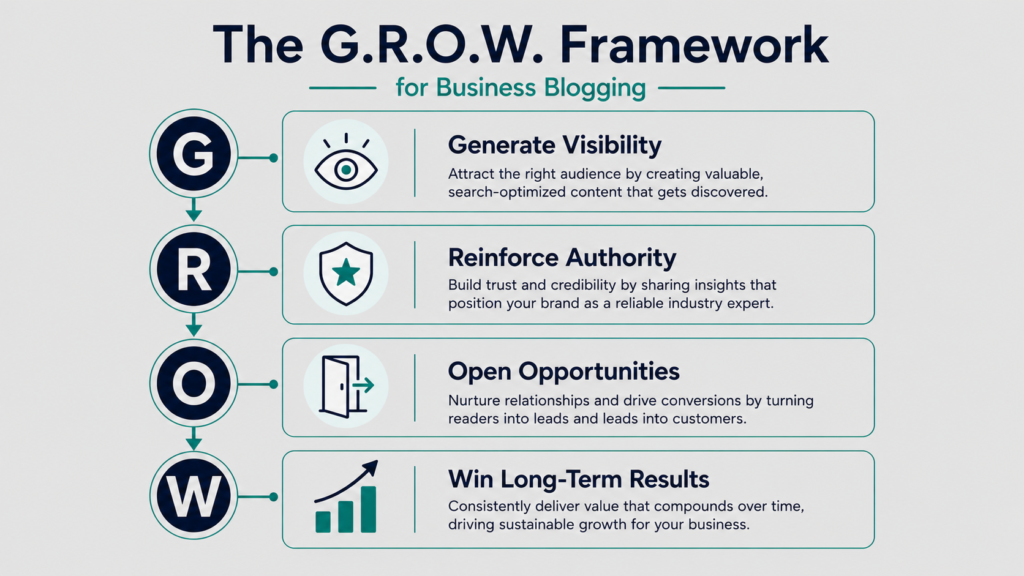
G — Generate Visibility
Blogging increases your chances of being discovered through search engines and other digital channels.
R — Reinforce Authority
Publishing useful insights demonstrates expertise and builds credibility.
O — Open Opportunities
Every article creates opportunities for engagement, lead generation, and customer conversations.
W — Win Long-Term Results
Unlike many marketing tactics, blogging produces compounding returns over time.
10 Benefits of Blogging for Businesses
1. Increases Organic Website Traffic
Every blog post creates another opportunity to appear in search engine results.
The more helpful and relevant content you publish, the more opportunities potential customers have to discover your business.
Over time, this can contribute to consistent organic traffic growth.
2. Builds Brand Authority
People are more likely to trust businesses that demonstrate expertise.
A blog allows you to share knowledge, answer questions, and provide insights that position your company as a credible resource.
Authority is often a deciding factor when prospects compare competing solutions.
3. Supports SEO Efforts
Search engines favor websites that provide valuable and relevant content.
Blogging allows businesses to target important keywords, address customer questions, and expand topical coverage.
A strong blog can become a foundation for long-term SEO growth.
4. Generates Qualified Leads
Not all website visitors are equal.
Strategic blog content attracts people who are actively seeking solutions to specific problems.
These visitors often represent higher-quality lead opportunities than broad, untargeted traffic.
5. Builds Trust Before the First Conversation
Many prospects research extensively before contacting a company.
Blog content allows businesses to educate potential customers and establish trust before a sales conversation ever occurs.
By the time a prospect reaches out, they may already view your company as a credible partner.
6. Supports the Customer Journey
Different buyers have different information needs.
Blogging allows businesses to create content for every stage of the customer journey, from awareness to consideration and decision-making.
7. Creates Content for Other Marketing Channels
A single blog post can support multiple marketing initiatives.
Content can be repurposed into:
- LinkedIn posts
- Email newsletters
- Social media updates
- Sales enablement materials
- Downloadable resources
This extends the value of each piece of content.
8. Encourages Internal Linking
A growing blog creates opportunities to connect related topics.
Strategic internal linking improves user experience and helps visitors discover additional content.
It also strengthens your website’s content ecosystem.
9. Provides Long-Term Marketing Value
Unlike short-lived campaigns, blog posts can continue generating traffic and leads long after publication.
High-quality content often becomes more valuable over time.
This makes blogging one of the few marketing activities with true compounding potential.
10. Differentiates Your Business
Many companies offer similar products or services.
Your insights, expertise, and perspective can help distinguish your business from competitors.
A blog provides a platform to communicate that difference.
Common Blogging Mistakes
Publishing Without a Strategy
Content should support business objectives, not simply fill a publishing calendar.
Prioritizing Quantity Over Quality
A few valuable articles often outperform dozens of weak ones.
Ignoring Search Intent
Successful content aligns with what readers actually want to learn.
Failing to Include Calls to Action
Every article should guide readers toward a logical next step.
Measuring Only Traffic
Traffic is important, but business outcomes matter more.
Monitor engagement, leads, and conversions alongside traffic metrics.
How to Maximize Blogging Results
To get the most from blogging:
- Understand your audience.
- Target meaningful topics.
- Focus on solving real problems.
- Maintain consistent publishing habits.
- Optimize content for readability.
- Include strategic calls to action.
- Measure performance regularly.
The businesses that benefit most from blogging are those that treat content as a long-term investment rather than a short-term tactic.
Frequently Asked Questions
Is blogging still effective for businesses?
Yes. Blogging remains one of the most effective ways to attract organic traffic, build authority, and support lead generation.
How often should a business publish blog posts?
Consistency matters more than frequency. A realistic publishing schedule is typically more effective than an ambitious schedule that becomes difficult to maintain.
How long does it take blogging to produce results?
Results vary, but blogging is generally a long-term strategy. Businesses often begin seeing meaningful benefits after several months of consistent effort.
Does blogging help SEO?
Yes. Blogging expands keyword coverage, addresses user questions, and provides opportunities to build topical authority.
Can blogging generate leads?
Absolutely. Well-targeted content can attract qualified prospects and guide them toward meaningful actions.
Final Thoughts
Blogging is more than a content marketing tactic.
When approached strategically, it becomes a long-term business asset that supports visibility, authority, lead generation, and growth.
The most successful business blogs are not necessarily the ones publishing the most content. They are the ones consistently creating valuable content that aligns with audience needs and business goals.
If you’re looking for a sustainable way to attract qualified prospects, strengthen your brand, and support long-term growth, blogging remains one of the most effective tools available.
Need help creating blog content that supports SEO, authority building, and lead generation? Let’s discuss how a strategic content approach can help your business achieve its goals.